What Makes Jeju Unique?
An island shaped by volcanoes, Jeju — one hour from Seoul, and a completely different Korea
When planning a trip to Korea, most people think of Seoul first. But just a one-hour flight from Seoul lies an island with palm trees, black basalt, and emerald-colored seas. It is Jeju Island.
The scenery, food, and dialect are so different that it can be hard to believe it is the same country. For Koreans too, Jeju feels less like a “domestic trip” and more like a short overseas vacation.
An Island Shaped by Volcanoes
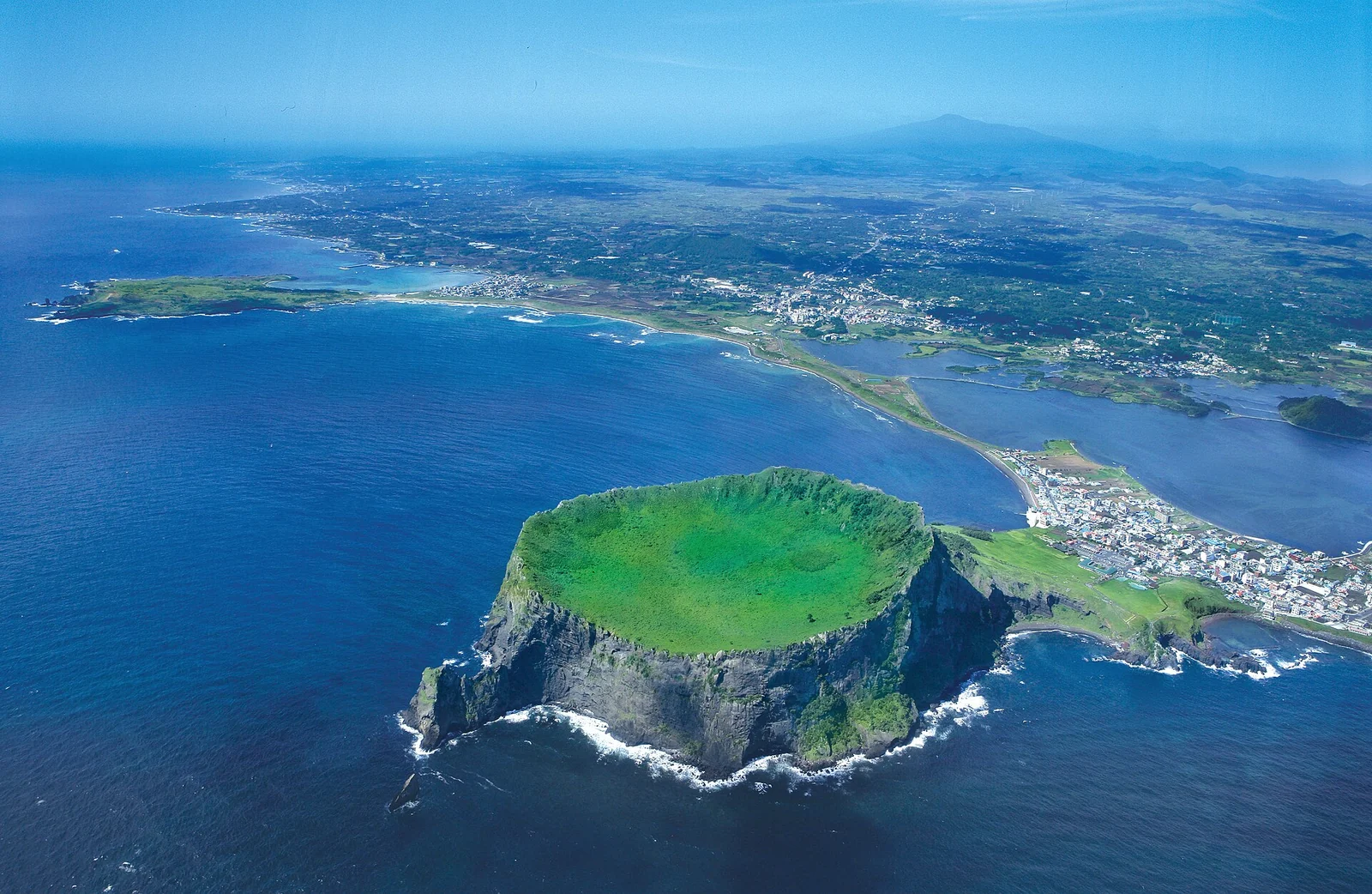
Jeju is an island created by volcanic activity over hundreds of thousands of years. At its center rises Hallasan (1,947 m), the highest mountain in Korea, and scattered around it like green waves are more than 360 small volcanic cones called “oreum.” Underground are caves formed by flowing lava, while along the coast, columnar joints carved by the waves remain.
Thanks to this unique nature, Jeju has achieved the distinction of being recognized by UNESCO in three categories. It is the only place in the world listed as a Biosphere Reserve (2002), a World Natural Heritage site (2007), and a Global Geopark (2010).
Places You Don’t Want to Miss
Seongsan Ilchulbong — A massive crater rising from the sea. As its name suggests, it is a famous sunrise spot, and it takes about 30 minutes to climb to the summit. It is one of Jeju’s most iconic landscapes.
Manjanggul Cave — A lava tube of global scale. After being closed for a long time for safety work, it reopened in May 2026.
Hallasan — Advance online reservations are required for the Seongpanak and Gwaneumsa routes to the summit. The round trip takes 8–9 hours, so set out at dawn.
Olle Trail — A walking route with 27 courses connecting the coast, villages, and oreum, totaling 437 km. One course usually takes 5–6 hours. If you are short on time, walking just one section of Course 7 is a good option.
Udo — A 15-minute ferry ride from Seongsan Port. It is a small island that can be circled in two hours by bicycle or electric vehicle.
Hyeopjae and Geumneung Beaches — Biyangdo Island floats beyond the white sand and shallow, clear water. The sunsets on the western coast are especially beautiful.
The Flavors of Jeju
Black pork grilled over charcoal is something you should try at least once when visiting Jeju. The local way is to dip the fatty meat in 멜젓 (anchovy jeotgal). Freshly caught sashimi, meat noodles in a rich broth, and hot abalone porridge are also not to be missed.
In winter, tangerines are sold everywhere along the roads. There are also many tangerine farms where you can pick and eat them straight from the trees. Small restaurants selling abalone, sea urchin, and conch harvested by haenyeo can be found in every fishing village — these places are much more delicious than restaurants in tourist areas.
Haenyeo, Grandmothers of the Sea
There are women who dive more than 10 meters without oxygen tanks to gather seafood. They are haenyeo. This centuries-old culture was inscribed on the UNESCO Representative List of the Intangible Cultural Heritage of Humanity in 2016. Most of the haenyeo who are still active today are in their 60s to 80s. This is a tradition that may disappear someday, so if you have the chance to meet them, do not miss it.
Good Things to Know
Entry — If you enter directly through Jeju International Airport, passport holders from most countries can stay visa-free for 30 days. However, this benefit applies only to Jeju. To travel to the mainland, including Seoul, you must meet separate visa requirements, so be sure to check before departure.
Getting Around — Buses are available, but service intervals are long. Renting a car is the most convenient option, and you will need an International Driving Permit.
When to Go — April–June and September–November are the best times. In spring, rapeseed flowers and cherry blossoms cover the island, while in autumn, silver grass does. Summers are hot and humid, with typhoons passing through; winters are fiercely windy, but the snowy scenery of Hallasan is special.
Itinerary — With 3 nights and 4 days, you can leisurely explore the eastern and western parts separately.
A Small Tip — The dol hareubang statues standing at village entrances are guardians of Jeju. Jeju has long been called “Samdado (三多島),” or the “island of three abundances,” because it has traditionally been said to have many winds, stones, and women. As you travel around the island, you will naturally come to understand what that means.
Jeju is not a large island. One day is enough to drive around it. But after climbing one oreum, walking one section of the Olle Trail, and eating seafood gathered by a haenyeo, you will understand why Korean people return to this island again and again.